▶ Video Profil Jurnal
Kenali Sophist
Akses terbuka, tanpa biaya penulis, double-blind peer review, dan DOI untuk setiap artikel.
⏱ 30 detik
+ Submit a Manuscript
Publication Ethics
Sophist is a peer-reviewed national journal available in print and online, published three times a year (January–April, May–August and September–December). This statement outlines the standards of ethical conduct for all parties involved in publication: authors, the Editor-in-Chief, the editorial board, peer reviewers and the publisher (the Faculty of Ushuluddin and Religious Studies, State Islamic University of Mataram). It is based on the COPE Best Practice Guidelines for Journal Editors.
✦
Editors
4 duties
❖
Reviewers
6 duties
✎
Authors
7 duties
▤
Publisher
Oversight at every stage
The publication of peer-reviewed articles in Sophist is a vital element in developing a coherent and credible body of knowledge. It directly reflects the quality of the authors' work and of the institutions with which they are affiliated. Peer-reviewed articles support and embody the scientific method. It is therefore essential to agree upon expected standards of ethical behaviour for all parties involved in publication: authors, journal editors, peer reviewers, the publisher and the scholarly community.
The Faculty of Ushuluddin and Religious Studies, State Islamic University (UIN) Mataram, as the publisher of Sophist, carries out its oversight duties at every stage of publication with a strong sense of responsibility, fully acknowledging its ethical and other obligations. We are committed to ensuring that revenue from advertising, reprints or other commercial activities does not affect or influence editorial decisions.
The Sophist editor is responsible for deciding which submitted articles merit publication. The validity of the work and its significance to researchers and readers must always be the primary basis for decisions. Editors may be guided by the editorial board's policies and are bound by legal requirements regarding defamation, copyright infringement and plagiarism, and may consult other editors or reviewers.
Editors evaluate research manuscripts and conceptual ideas within social sciences, political science, Islamic studies and tafsir (Qur'anic exegesis), covering political Islam and Muslim societies, contemporary Islamic thought, the Qur'an and social transformation, environmental humanities and Islamic perspectives, and peace, justice and sustainable development in Indonesia and globally.
The editor and all editorial staff must not disclose any information about a submitted manuscript to anyone other than the corresponding author, reviewers, potential reviewers, other editorial advisers and the publisher, as appropriate.
Unpublished materials disclosed in a submitted manuscript must not be used in the editor's own research without the express written consent of the author.
Peer review assists the editor in making editorial decisions and, through editorial communication with the author, may also help the author improve the paper.
Any selected reviewer who feels unqualified to review the research, or knows that a timely review is impossible, must notify the editor and withdraw from the review process.
Any manuscript received for review must be treated as a confidential document. It must not be shown to or discussed with others except with the editor's authorisation.
Reviews must be conducted objectively. Personal criticism of the author is inappropriate. Reviewers should express their views clearly, supported by arguments.
Reviewers should identify relevant published work not cited by the author, accompany any statement that an observation or argument was previously reported with a citation, and notify the editor of any substantial similarity or overlap with other published papers they know of.
Privileged information or ideas obtained through peer review must be kept confidential and not used for personal gain. Reviewers must not review manuscripts in which they have conflicts of interest arising from competitive, collaborative or other relationships with the authors, companies or institutions connected to the paper.
Authors of original research must present an accurate account of the work performed and an objective discussion of its significance. Underlying data must be represented accurately, with enough detail and references to permit replication. Fraudulent or knowingly inaccurate statements are unethical and unacceptable.
Authors must ensure that their work is entirely original, and that any use of the work and/or words of others is appropriately cited or quoted.
Authors should not publish manuscripts describing essentially the same research in more than one journal or primary publication. Submitting the same manuscript to more than one journal concurrently is unethical and unacceptable.
Proper acknowledgement of the work of others must always be given. Authors should cite publications that have been influential in determining the nature of the reported research.
Authorship is limited to those who made a significant contribution to the conception, design, execution or interpretation of the research; all of them should be listed as co-authors, and others acknowledged as contributors. The corresponding author ensures that the author list is correct and that all co-authors have approved the final version and agreed to its submission.
All authors must disclose in their manuscript any financial or other substantive conflict of interest that could be perceived as influencing their results or interpretation. All sources of financial support for the project must be disclosed.
When authors discover a significant error or inaccuracy in their own published work, they must promptly notify the journal editor or publisher and cooperate with the editor to retract or correct the paper.
▶ Video Profil Jurnal
Kenali Sophist
Akses terbuka, tanpa biaya penulis, double-blind peer review, dan DOI untuk setiap artikel.
⏱ 30 detik
+ Submit a Manuscript
ΣΟΦΙΑ · الحكمة · Sapientia
۞
Sophist
from the Greek sophistēs, one who practises sophia: wisdom pursued through reason, dialogue and critique.
يُؤْتِي الْحِكْمَةَ مَنْ يَشَاءُ ۚ وَمَنْ يُؤْتَ الْحِكْمَةَ فَقَدْ أُوتِيَ خَيْرًا كَثِيرًا
"He grants wisdom to whom He wills, and whoever is granted wisdom has certainly been given much good."
QS. Al-Baqarah [2]: 269
Three Lenses of Inquiry
الاجتماعSociety
al-Ijtimāʿ: the human bond
السياسةPolity
al-Siyāsah: power and justice
التفسيرExegesis
al-Tafsīr: reading the Revelation
"Philosophy is the companion of the Sharīʿa and her foster sister."
Ibn Rushd, Faṣl al-Maqāl
Thinking between ʿaql and naql, reason and revelation
since 2018 · UIN Mataram
➳
ARJUNA
Accreditation Dossier
Like Arjuna, who saw only the eye of the bird:
one aim, one scope, every evidence in sight.
Journal Identity
e-ISSN 2745-8571 · p-ISSN 2656-1220
Publisher Faculty of Ushuluddin and Religious Studies, UIN Mataram
Since 2018 · Frequency 3 issues/year (January–April, May–August, and September–December)
Accreditation SINTA 4
Editor in Chief Agus Dedi Putrawan
Email journalsophist@uinmataram.ac.id
Eight Targets of Assessment
1 · 2 Name & Publisher
About · Focus & Scope · Contact
3 Editing & Management
Editorial Team · Reviewers · Peer Review · Guidelines · Ethics · Plagiarism · AI Policy
4 Article Substance
Current Issue · Citations (Google Scholar)
5 · 6 Writing Style & Layout
Article Template · Submissions
7 Periodicity
Publication Frequency · Archive
8 Dissemination
OAI-PMH · SINTA · Garuda · Crossref DOI · Dimensions · Statistics · Open Access · CC BY-SA 4.0
Seventeen Policy Pillars
The policies of the journal, one arrow each.
07License
إِتْقَان
Itqān: excellence in every detail
arjuna (Skt.): bright, clear.
Accreditation as transparency.
Similarity Check
 Similarity check by Compilatio
 Originality check by Turnitin
 Plagiarism Checker X
Writing & References
 English grammar and style check
 Reference manager (recommended)
Please check similarity and references before submitting your manuscript.
▶ Video Tutorial · Reviewer
Jadi Reviewer Sophist
Gabung sebagai Mitra Bestari dan ikut menjaga mutu ilmiah jurnal.
⏱ 52 detik ✨ Versi baru
1Daftar akun atau login
2Centang Mitra Bestari (akun lama: Edit Profil → Peran)
3Terima undangan dan telaah lewat OJS
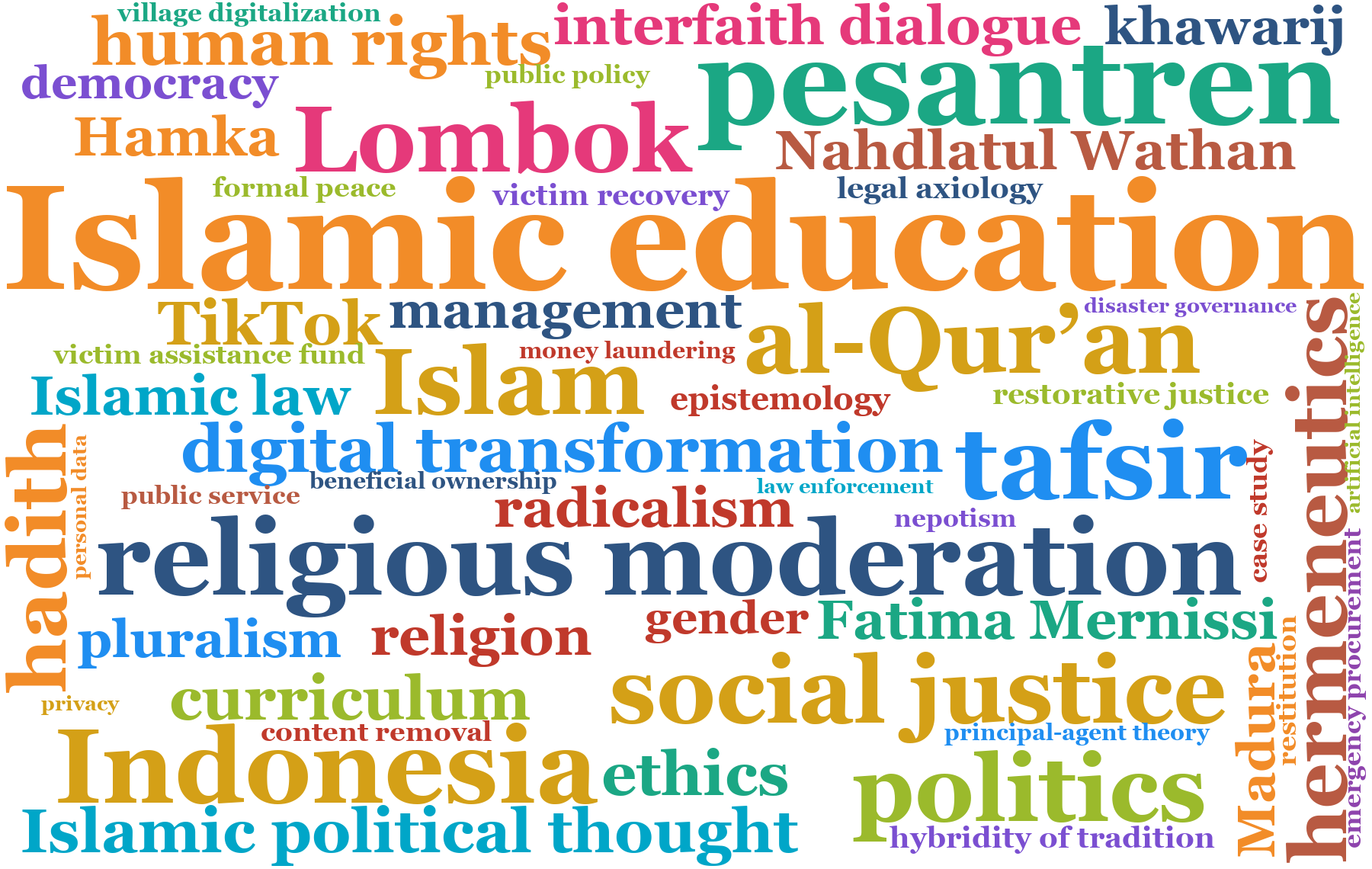
✦ Keywords
Faculty of Ushuluddin and Religious Studies
Universitas Islam Negeri Mataram, Kampus 2
Jl. Gajah Mada No. 100, Pagesangan, Jempong Baru, Sekarbela, Kota Mataram, Nusa Tenggara Barat 83116, Indonesia
Phone: 0819 3679 9538
Email: journalsophist@uinmataram.ac.id

© 2018–2026 Sophist: Jurnal Sosial Politik Kajian Islam dan Tafsir, Faculty of Ushuluddin and Religious Studies, Universitas Islam Negeri Mataram. Published articles are licensed under a Creative Commons Attribution-ShareAlike 4.0 International License.

